
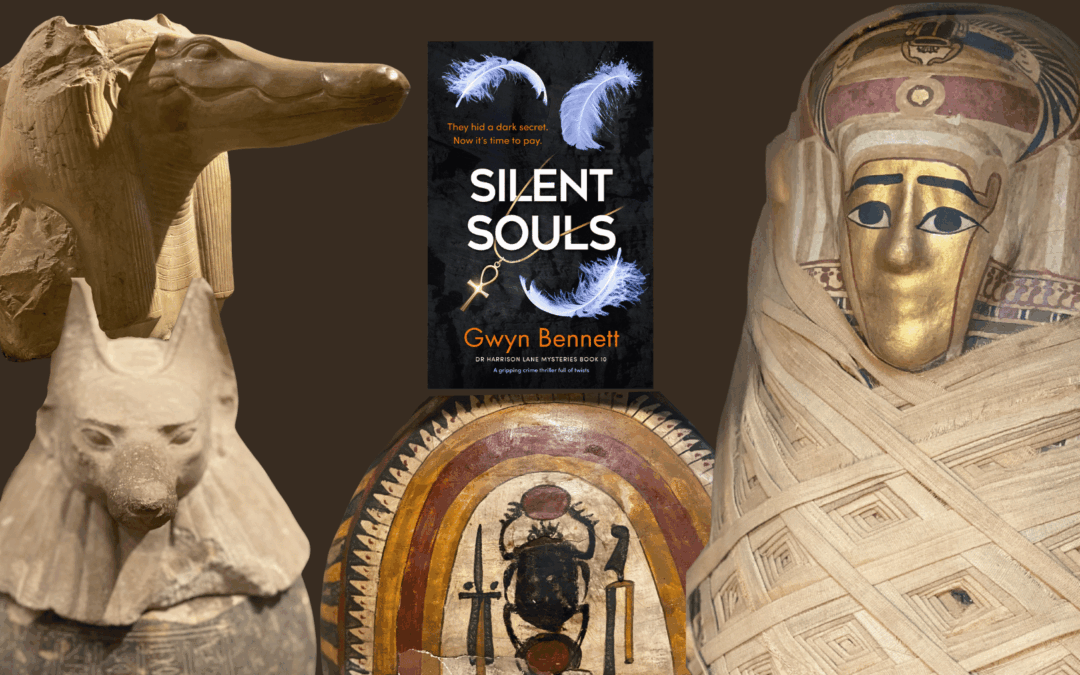
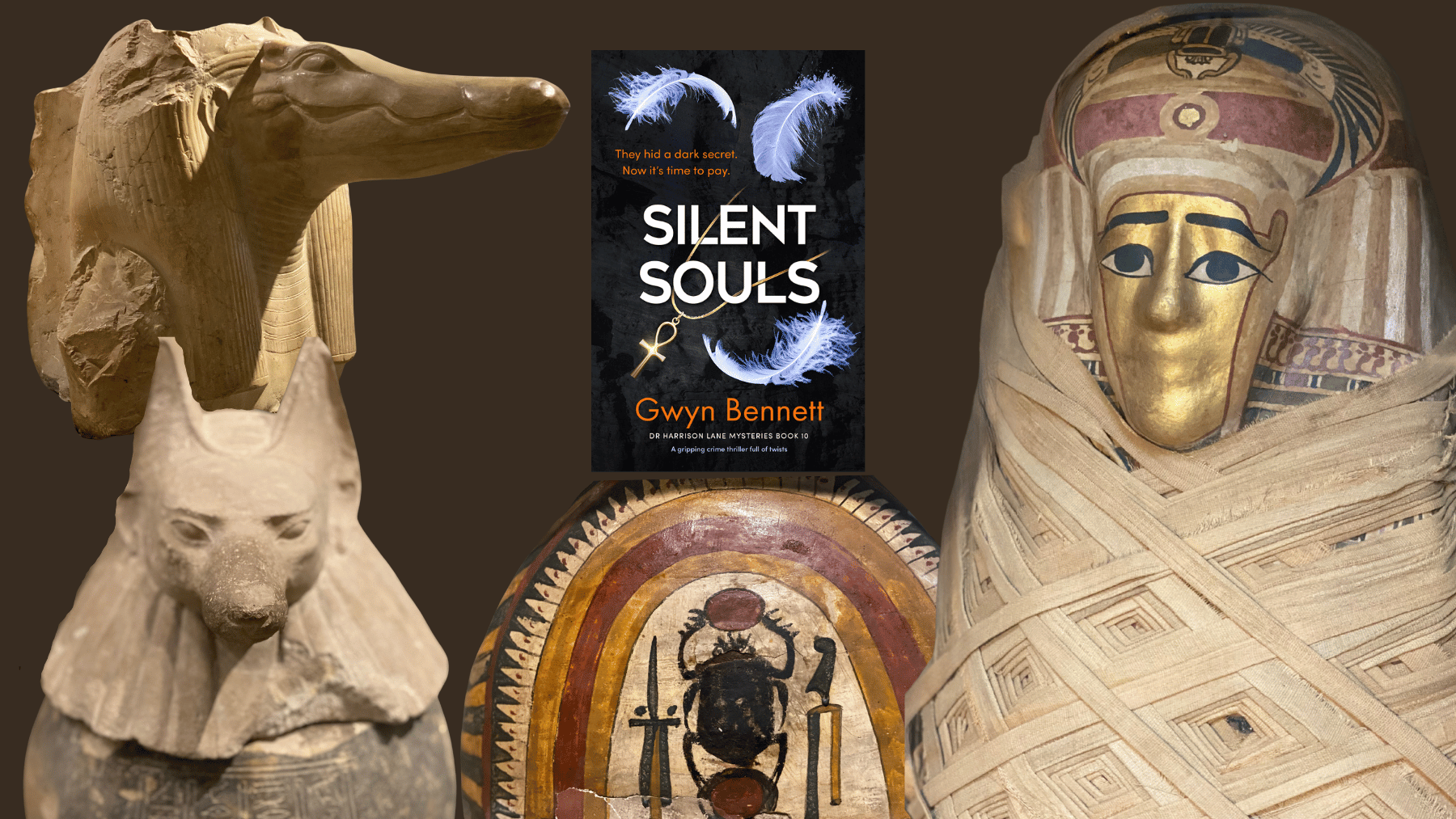
Ancient Egyptian Religion: Fear, Death, and why these Ancient Beliefs are still found in modern thrillers and horror books
Ancient Egyptian religion can look strange from a distance. Animal-headed gods, elaborate tombs, sacred spells, judgment after death, and a vast obsession with the afterlife can make it seem like a belief system from a world utterly unlike our own.
But beneath the gold masks, pyramids, and hieroglyphs lies something much more familiar.
Ancient Egyptian religion was built around some of the deepest fears human beings have always carried: fear of death, fear of chaos, fear of injustice, fear of losing loved ones, and the fear of being forgotten. Alongside those fears came equally powerful needs: the need for order, protection, meaning, memory, survival, and hope.
That is why ancient Egyptian religion still feels so interesting to us. It may be ancient, but its human fears still resonate with us today.
And that is also why it still connects so strongly to modern thriller books and horror films. It’s why I used it as the basis for the tenth Harrison Lane thriller, Silent Souls. Harrison is passionate about proving that most of the crimes that seem inexplicable to us are in fact not supernatural but simple human fears and evil. Whether you were an ancient Egyptian or alive now, much may have changed, but not our base fears.
What was ancient Egyptian religion really about?
Ancient Egyptian religion was not just a collection of myths about gods and enormous pyramids. It was a system for making sense of a frightening and uncertain world.
It gave people a way to think about:
- death
- disorder
- justice
- danger
- grief
- protection
- memory
- what lies beyond human control
Like many religions, it helped transform fear into story, ritual, symbol, and belief. It gave names to invisible dangers. It gave people protective figures to call on. It offered moral order in a world that could feel brutally unstable. Most of all, it provided hope.
At the heart of Egyptian religion was ma’at — truth, justice, balance, and the right ordering of the world. This was not just a philosophical idea, it spoke to the oldest human fear: that life might be random, unjust, and ruled by chaos.
Why was death so central to ancient Egyptian religion?
More than anything else, ancient Egyptian religion reveals how deeply human beings fear death. They built an entire spiritual system around preparing for it, surviving it, and finding meaning beyond it. Bodies were preserved. Tombs were filled with objects for the next life. Sacred words were written down. Amulets were placed on the dead. Names were carefully recorded so that identity would not vanish.
This was not because the Egyptians were unusually obsessed with death. It was because, like we are today, they were deeply human.
They feared disappearance. They feared losing those they loved. They feared that a life might end without justice, memory, or continuation. Religion answered that fear by insisting that death was not the end of the story.
The afterlife mattered because people wanted to believe that the self could survive, that the dead could still matter, and that what had been loved in life was not simply erased.
What is ma’at, and why did it matter so much?
Ma’at is one of the clearest examples of how religion speaks to emotional need.
The word is often translated as truth, justice, balance, harmony, and cosmic order. In simple terms, it meant that the world had a proper shape and that human beings were meant to live in alignment with it.
Why does that matter so much?
Because people fear disorder.
They fear violence, betrayal, collapse, lies, corruption, and the feeling that nothing is fair. It’s why we have sophisticated societies here on Earth. Ma’at offered an answer that went further. It said that order was real, justice mattered, and the universe was not meant to belong to chaos forever.
That need has not gone away. It still sits underneath many religious beliefs, and it also sits underneath modern storytelling. We still want to believe that wrong can be exposed, balance can be restored, and disorder can be resisted. It’s why so many of us enjoy reading crime and thriller books because that disorder is neatly packaged and solved. The good guys win and the bad guys get their just deserts.
Which Egyptian gods reveal the most about human fear and need?
Egyptian religion is especially revealing because its gods reflect so many different parts of human vulnerability.
Some gods embodied danger. Some offered protection. Some preserved knowledge. Some guarded the dead. Some reflected natural forces people relied upon to survive. Together, they created a map of what people feared most and needed most.
Seth or Set: fear of chaos, violence, and disruption
Seth, also known as Set, is one of the most dramatic figures in Egyptian religion. He is associated with storms, deserts, conflict, violence, and disorder. He is the force that breaks what should remain whole.
What makes Seth so powerful is that he gives shape to a fear people still understand: the fear that peace is fragile.
A family can be broken. A home can be invaded. Order can collapse. Trust can be betrayed. Seth represents the destructive truth that chaos is always close.
That is one reason he feels so modern. He is not just an old god. He is the emotional ancestor of countless modern villains and destructive forces in fiction. It is also why he’s at the centre of the tenth Harrison Lane thriller, Silent Souls.
Bes: fear entering the home
Bes is almost the opposite of Seth in function, which is exactly why he matters. He was a household protector associated with women, children, childbirth, music, family life, and the warding off of danger.
Bes shows that religion was not only about kings and cosmic order. It was also about everyday fear.
People worried about:
- childbirth
- children surviving
- danger in the night
- illness
- spiritual threats inside the home
Bes mattered because he addressed the private fears people carried behind closed doors. That same fear still drives modern storytelling. Some of the most powerful thrillers and horror stories begin when the home stops being safe. It’s why domestic psychological thrillers such as The Housemaid and Mrs Barnes, resonate so powerfully with readers. We can relate to the fears of the characters and we need the hero/heroine to win.
Seshat: fear of being forgotten
Seshat, goddess of writing, measurement, and record-keeping, reflects another deeply human need: the need to preserve memory.
Human beings fear being forgotten. They fear losing truth, identity, names, achievements, and stories. Seshat mattered because writing was not merely practical in Egypt. It was sacred. To write something down was to preserve it against disappearance.
That need remains deeply familiar. Memory, names, secrets, records, hidden truths, and erased histories still sit at the centre of many modern thriller books.
Tefnut, Dedun, Ba-Pef, Nehebkau, and Nectanebus
The lesser-known figures are just as revealing.
Tefnut, linked with moisture and life-giving balance, reflects dependence on the natural world and fear of losing the conditions that make life possible. There are many modern apocalyptic thrillers where these fears are the central theme.
Dedun, associated with wealth, incense, and prosperity, shows that people also longed for abundance, security, and blessing. We know that many modern crime thrillers are driven by greed, while even romance books will often share this need in a less threatening way.
Ba-Pef, a darker and more troubling presence, reflects the fear of unseen torment and spiritual suffering. Horror novels use this fear to their best advantage.
Nehebkau, connected with protection and the soul, shows the hope that a person might be guarded even in death.
Together, these figures show that Egyptian religion spoke not only to cosmic questions but to practical, intimate, everyday vulnerabilities.
Why did judgment after death matter so much?
The famous Weighing of the Heart is one of the most powerful scenes in ancient religion and features in the crime thriller, Silent Souls.
The heart of the dead person is weighed against the feather of ma’at. If the heart is heavy with wrongdoing, the soul fails. If it is balanced and true, the person may pass into blessed existence.
This scene matters because it answers another basic human need: the need to believe that actions matter.
People fear that injustice will go unaddressed. They fear that cruelty will escape consequences. They fear that goodness may count for nothing. Judgment after death answers those fears with a promise that moral truth cannot be buried forever.
That need has never disappeared. It still drives religion, and it still drives fiction. It’s why we always want the good guy to win. Hollywood films are driven by the exact same need.
How do these same fears still shape modern thriller books and horror films?
This is where ancient Egyptian religion becomes especially interesting for modern readers.
The same fears that shaped Egyptian beliefs still shape our stories now. What has changed is the form. Instead of gods, underworld beings, sacred judgement, and protective amulets, we now get killers, conspiracies, secret sects, family secrets, and real-life human monsters.
But the emotional engine is often the same.
Both ancient religions and modern thrillers are built around fears such as:
- death
- chaos
- invasion
- betrayal
- injustice
- unseen danger
- loss of identity
- the unsafe home
- the fear that the past will return
- the hope that order can be restored
In that sense, modern thrillers and horror films often do some of the same emotional work religion once did. They give fear a face. They turn vague dread into a narrative. They allow us to confront terror in a contained form, and win.
Why do these fears still make such powerful stories?
Stories become powerful when they touch something primal.
Ancient Egyptian religion knew that. It created symbolic systems around death, judgment, danger, protection, and renewal. Modern thrillers and horror films do exactly the same, even when they look very different on the surface.
A thriller often begins when order is broken. A person disappears. A lie is uncovered. A family is threatened. A home becomes unsafe. A secret rises. In other words, ma’at collapses.
The story then becomes a struggle to restore truth, safety, or justice.
Horror works in a similar way, but often pushes further into the unknown. It asks what happens when danger is older than us, stronger than us, hidden from us, or impossible to fully control. That is not far from ancient fears of spiritual threats, underworld forces, chaos, and judgment.
The forms differ. The emotional roots remain. And in our modern world, where there is so much real-life uncertainty and danger, we turn to thriller and horror books to give us the hope that we can have an impact on keeping our world safe.
What does Seth have in common with modern villains?
Seth is not just an ancient figure of chaos. He is the ancestor of a type of threat that still dominates modern fiction.
He represents the force that tears order apart.
That role is now played by:
- the stalker
- the serial killer
- the manipulator
- the abuser
- the invader
- the corrupt authority figure
- the supernatural intruder
What makes these figures so memorable is that they are never just individuals. They become symbols of deeper fears. They embody disruption, cruelty, betrayal, and the collapse of safety. That is exactly why they feel so powerful.
Why is the unsafe home such a lasting fear?
This is where Bes and modern domestic thrillers connect so strongly.
One of the oldest human fears is that the place meant to protect us may fail. The home may be invaded. The family may be threatened. The parent may be unable to save the child. The bedroom may no longer be safe.
Ancient Egyptians addressed that fear through protective deities like Bes.
Modern thrillers and horror films address it through plots in which ordinary domestic life is shattered. Home invasion stories, haunted house films, domestic suspense novels, and psychological thrillers all draw on the same anxiety: what if the place where we feel safest is not safe at all?
That fear is ancient. It still works because it is still real.
Why does the afterlife still haunt modern entertainment?
The Egyptian fascination with the afterlife never truly disappeared. It simply changed shape.
Modern horror is full of ghosts, possessions, curses, resurrections, and the dead refusing to stay silent. Modern thrillers are often driven by bodies, secrets, memory, guilt, and the moral claim the dead still make on the living.
Again and again, the dead return.
Not always literally, but emotionally.
A victim demands justice.
A secret burial is uncovered.
A family history resurfaces.
A buried truth rises.
A crime refuses to stay hidden.
This is deeply connected to the same need ancient Egyptian religion answered: the need to believe that death does not erase meaning.
Key takeaways
- Ancient Egyptian religion was shaped by fear, grief, hope, and the need for protection.
- Death and the afterlife mattered because people feared disappearance and longed for continuity.
- Ma’at offered reassurance that order and justice could survive chaos.
- Gods like Seth and Bes gave shape to both destruction and protection.
- The same fears still power modern thriller books and horror films.
- Ancient religion and modern storytelling both help people process danger, loss, and uncertainty.
Final thoughts
Ancient Egyptian religion was not only a religion of temples, gods, and tombs. It was a religion of human vulnerability.
It gave shape to fear. It gave language to hope. It offered ways to think about death, grief, justice, danger, and the longing to keep loved ones safe. That is why it still matters to us all.
And that is also why it still feels so close to modern storytelling.
Thrillers and horror films may no longer speak of ma’at, sacred judgment, or protective household gods, but they are often built around the same emotional realities. They are still asking what happens when chaos enters ordinary life. They are still asking whether the innocent can survive, whether truth can come to light, and whether order can somehow be restored.
The gods may have changed. The fear has not.
FAQ
What was ancient Egyptian religion mainly designed to do?
Ancient Egyptian religion helped people cope with death, fear, chaos, injustice, and uncertainty by offering rituals, gods, a moral order, and hope for survival after death.
Why were ancient Egyptians so focused on death and the afterlife?
Ancient Egyptians were deeply concerned with death because, like people today, they feared loss, disappearance, and the possibility that life might end without meaning, memory, or justice.
What human fears shaped ancient Egyptian religion?
Ancient Egyptian religion was shaped by fears of death, disorder, betrayal, suffering, spiritual danger, the loss of loved ones, and the collapse of safety in both home and society.
What is ma’at in ancient Egyptian religion?
Ma’at is the Egyptian idea of truth, justice, balance, and cosmic order. It reflects the human need to believe that life is not random and that order can survive chaos.
Who was Seth in ancient Egyptian religion?
Seth, also called Set, was the god associated with chaos, storms, violence, and disorder. He represented destructive forces that threaten order and peace.
Why does ancient Egyptian religion still feel relevant today?
Ancient Egyptian religion still feels relevant because it deals with universal human concerns, including death, justice, fear, meaning, family, protection, and the hope that life has order.
How is ancient Egyptian religion similar to modern horror and thriller stories?
Both ancient Egyptian religion and modern thrillers or horror stories turn deep human fears into narratives about danger, chaos, judgment, survival, and the struggle to restore order.
Why are ancient fears still so powerful in modern books and films?
Ancient fears remain powerful because they are rooted in human psychology. Stories about death, betrayal, evil, the unknown, and threatened family life still speak strongly to modern audiences.
Was ancient Egyptian religion only about gods and temples?
No. It was also about everyday life, including family protection, childbirth, grief, memory, morality, survival, and fear of what happens after death.
Why does the unsafe home matter so much in thrillers and horror?
Because one of the deepest human fears is that the place meant to protect us may fail. This fear appears in both ancient household protection beliefs and modern stories about domestic danger.
Why does the afterlife matter so much in religion and storytelling?
The afterlife matters because human beings struggle to accept disappearance. It speaks to grief, love, memory, guilt, justice, and the hope that death is not the end.